

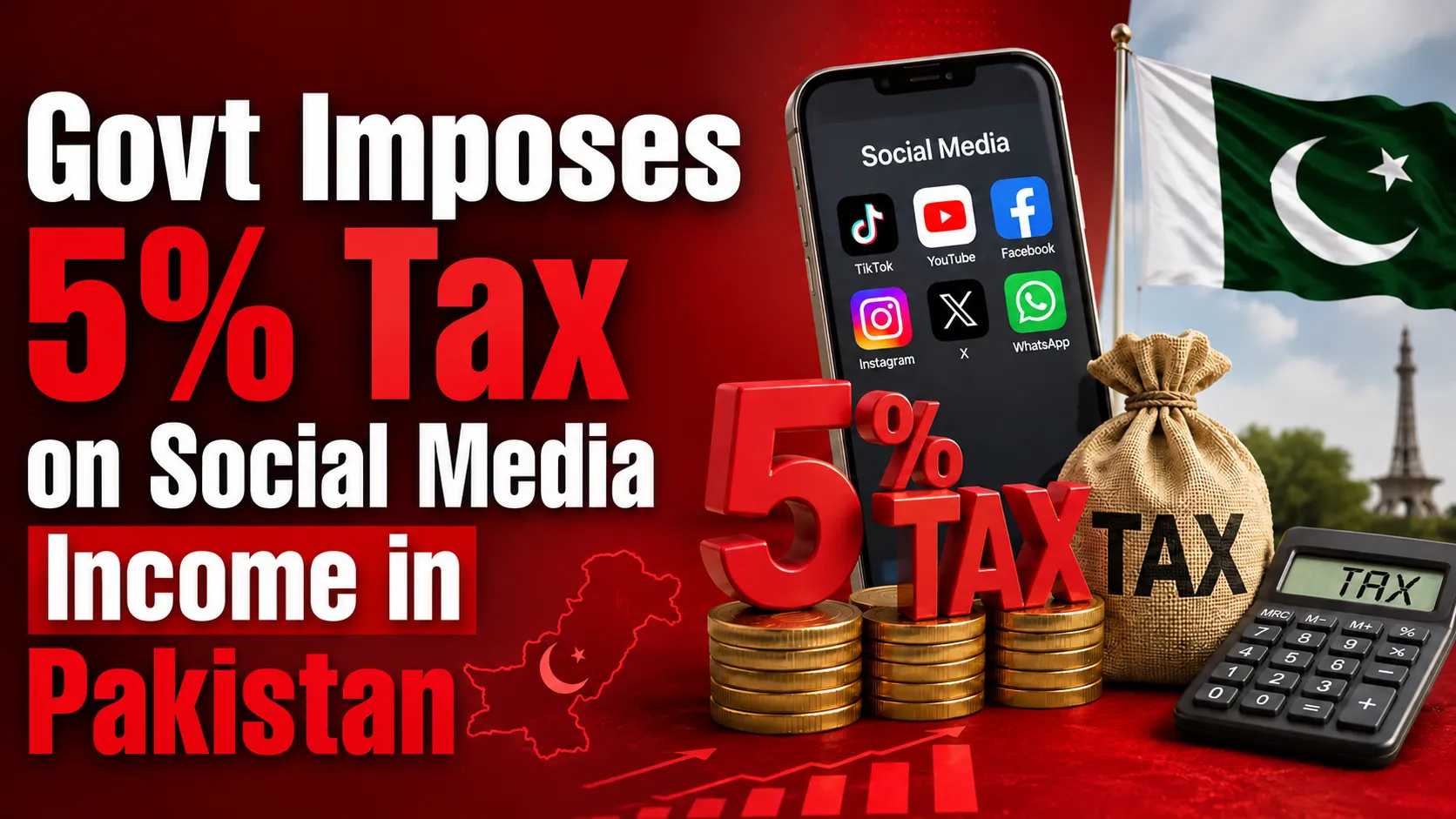
The Government of Pakistan is moving toward bringing digital earnings into the formal tax system through a new proposal included in the Finance Bill 2026–27. Under the proposed framework, income generated from social media platforms could be subject to a 5% withholding tax.
The proposal was reviewed and approved by the Senate Standing Committee on Finance and Revenue during discussions on amendments related to the Income Tax Ordinance 2001. Senior officials from the Ministry of Finance and the Federal Board of Revenue (FBR) also participated in the session and briefed lawmakers on various taxation measures.
Digital Economy Comes Under Focus
Pakistan’s online economy has expanded rapidly in recent years. Thousands of individuals now earn income through content creation, influencer marketing, freelancing, affiliate promotions, digital advertising, and other internet-based activities.
According to FBR officials, digital platforms have become a major source of income for many Pakistanis. As online earnings continue to grow, authorities believe they should be incorporated into the country’s documented tax structure.
Officials say the objective is to ensure that emerging sectors contribute to the national revenue system in the same way as traditional industries.
Proposed Tax Structure
Under the proposed policy, individuals earning up to Rs. 600,000 annually from social media-related activities would remain exempt from taxation.
For individuals whose yearly social media income falls between Rs. 600,000 and Rs. 1.2 million, a 5% withholding tax would apply.
The proposed deduction would be collected at the source before payments are transferred to eligible recipients through designated channels.
Authorities argue that this approach protects smaller creators while ensuring that higher earners contribute to the tax system.
Concerns Raised During Committee Meeting
Although the proposal received approval, several lawmakers expressed concerns about its potential impact on Pakistan’s growing digital sector.
Committee Chairman Senator Saleem Mandviwalla highlighted that social media has become an important source of livelihood for many young Pakistanis. He emphasized the need to support digital entrepreneurship and carefully assess the consequences of additional taxation.
Members noted that freelancers, startup founders, influencers, and independent content creators could face additional financial pressure if the policy is implemented without broader consultation.
Debate Over Foreign Exchange Earnings
Some committee members also questioned whether imposing taxes on digital income could affect foreign exchange inflows.
Senator Abdul Qadir pointed out that many Pakistani freelancers and online creators earn revenue from international platforms. These earnings contribute valuable foreign currency to the economy and play an important role in the country’s digital exports sector.
He suggested that policymakers should strike a balance between revenue collection and encouraging growth in digital services.
Government Defends the Proposal
FBR representatives maintained that the measure is intended to improve documentation rather than discourage online businesses.
Officials stated that the digital economy is becoming an increasingly significant part of Pakistan’s financial landscape. Bringing social media earnings into the tax net would help improve transparency, reduce undocumented income, and strengthen compliance across sectors.
According to government officials, the long-term goal is to create a fair taxation system where all major sources of income are treated consistently.
Who Could Be Affected?
If implemented, the proposed tax could impact a wide range of digital professionals, including:
- Social media influencers
- YouTubers
- Freelancers
- Affiliate marketers
- Digital advertisers
- Online content creators
Individuals earning above the exemption threshold may see a reduction in their take-home income due to the withholding deduction.
At the same time, experts believe the policy could encourage better financial recordkeeping and greater formalization within Pakistan’s digital workforce.
Balancing Regulation and Growth
Pakistan’s digital sector has witnessed strong growth due to increasing internet penetration, smartphone adoption, and access to global online marketplaces.
While supporters of the proposal believe it will broaden the tax base and improve revenue collection, critics argue that excessive regulation could slow the momentum of a sector that continues to create employment opportunities for young people.
The challenge for policymakers will be finding the right balance between taxation and continued digital growth.
